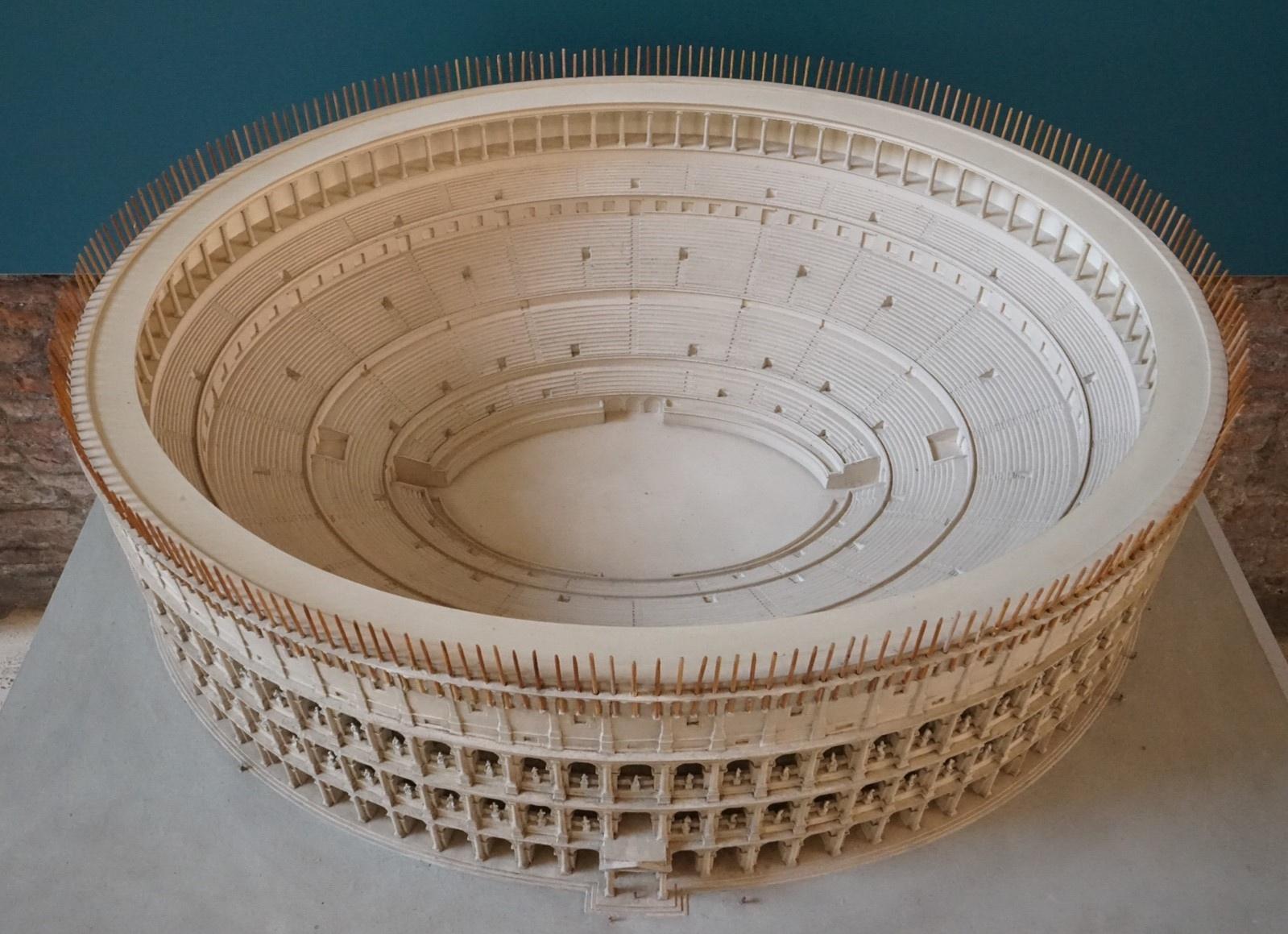
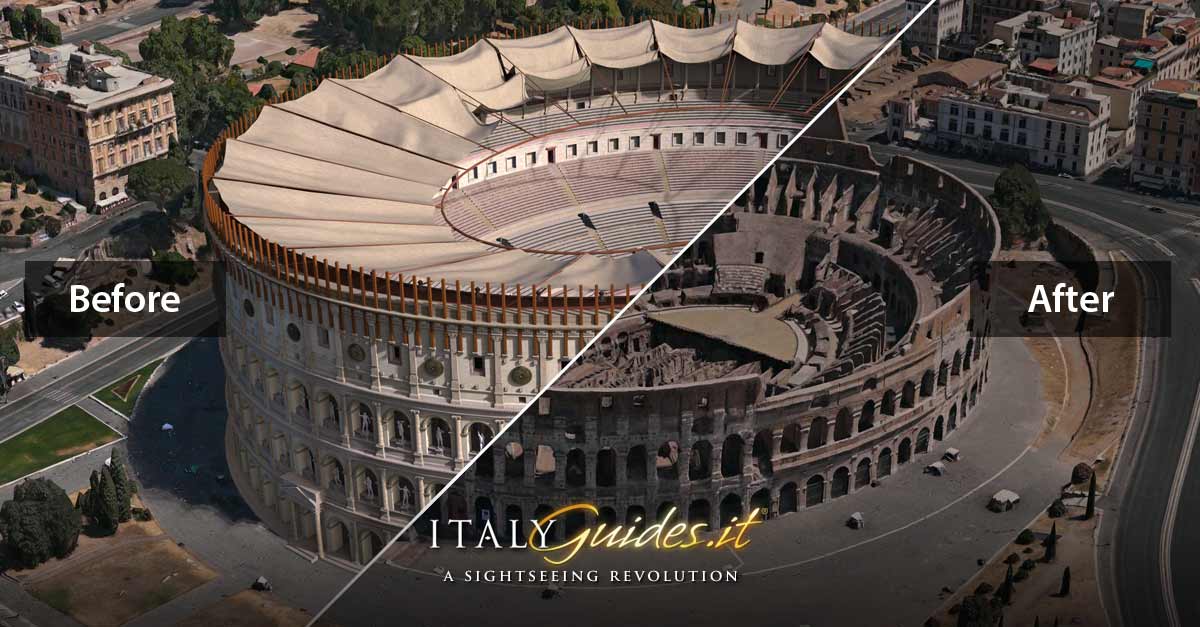
Colosseum, Rome 3D reconstruction ItalyGuides.it
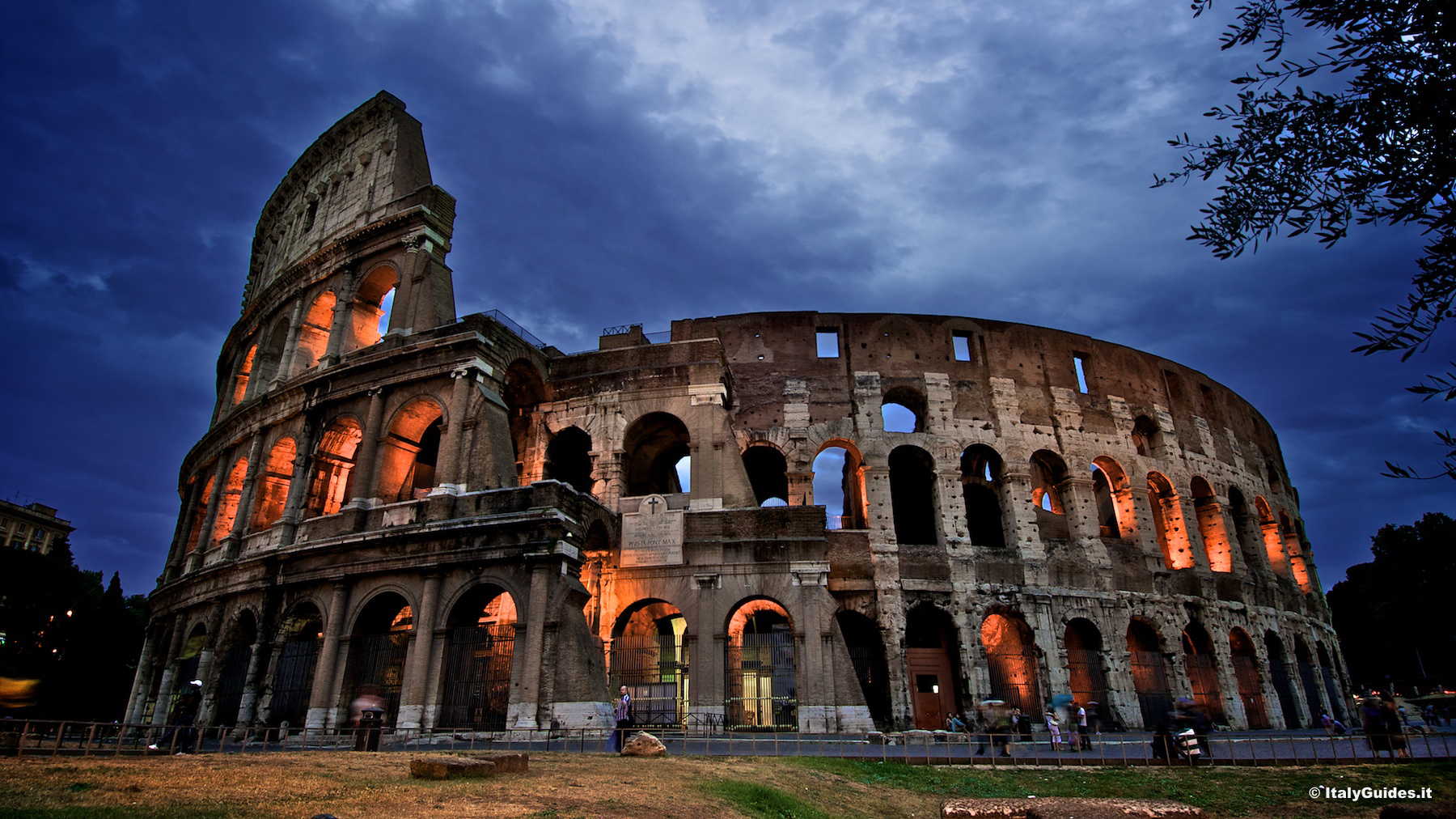
So the Colosseum received a perimeter of 1,835 Roman feet (80x 23 =1840), and the arena was adjusted to 280 x 168 (still 5:3). Similar numerical patterns can be seen in the Colosseum's famous façade.
Colosseum Photo
In 70 A.D., Vespasian ordered the construction of the new amphitheater in the city center, funded with the spoils from the Roman siege of Jerusalem during the First Jewish-Roman War. The Colosseum.
Colosseum of Rome Pictures, History & Facts

The Colosseum (/ ˌ k ɒ l ə ˈ s iː ə m / KOL-ə-SEE-əm; Italian: Colosseo [kolosˈsɛːo]) is an elliptical amphitheatre in the centre of the city of Rome, Italy, just east of the Roman Forum.It is the largest ancient amphitheatre ever built, and is still the largest standing amphitheatre in the world, despite its age. Construction began under the emperor Vespasian (r.
Colosseum, Rome 3D reconstruction ItalyGuides.it
Colosseum Earthquake of 1349. We all are very well aware that what we can see today of the Colosseum is not its initial shape and that some tragic event led to a massive break in this landmark. Then, let's see what caused it. In 1349, Rome was profoundly devastated by a tragic earthquake and, sadly, the Colosseum was seriously harmed.
30+ Fun Facts About the Colosseum

Dig in to the history of the Roman Empire's staged gladiatorial naval battles and how they flooded the Colosseum to reenact famous battles. — Starting in 80 CE, residents of Rome and visitors from across the Roman Empire would fill the stands of the Colosseum to see gladiators duel, animals fight and chariots race around the arena. And for the grand finale, water poured into the arena.
5 Facts About The Roman Colosseum Ancient Society
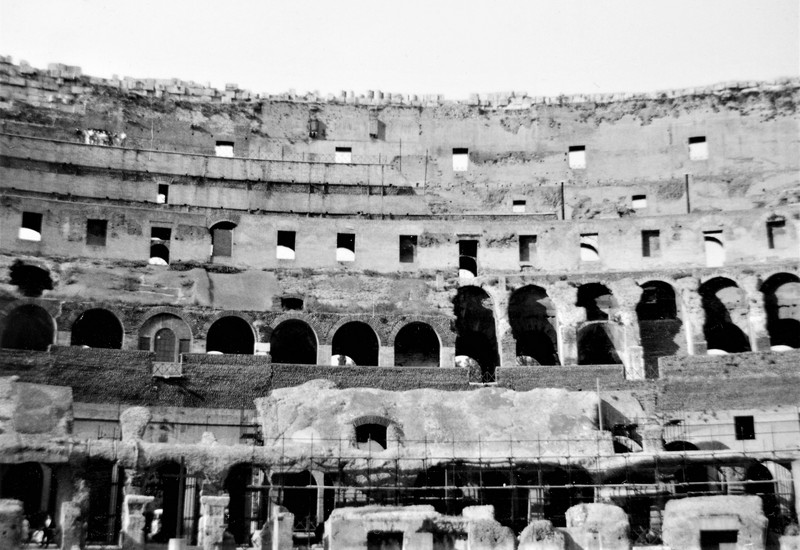
One of the main reasons why the Roman Colosseum was broken and partly destroyed is that, after the fall of Rome, most of the existing structures were used as materials to create new constructions. Moreover, in the 7th century, an earthquake in Rome destroyed part of the Colosseum. Finally, after the fall of the Roman Empire, the amphitheater was robbed by people, so many materials and.
What's the best way to see the Colosseum in Rome? Following the Rivera

The Colosseum, also named the Flavian Amphitheater, is a large amphitheater in Rome. It was built during the reign of the Flavian emperors as a gift to the Roman people. Construction of the Colosseum began sometime between C.E. 70 and 72 under the emperor Vespasian. It opened nearly a decade later and was modified several times in the following.
Colosseum, Rome. 19th century view of the Colosseum in Rome. Photo taken between 1860 and 1890
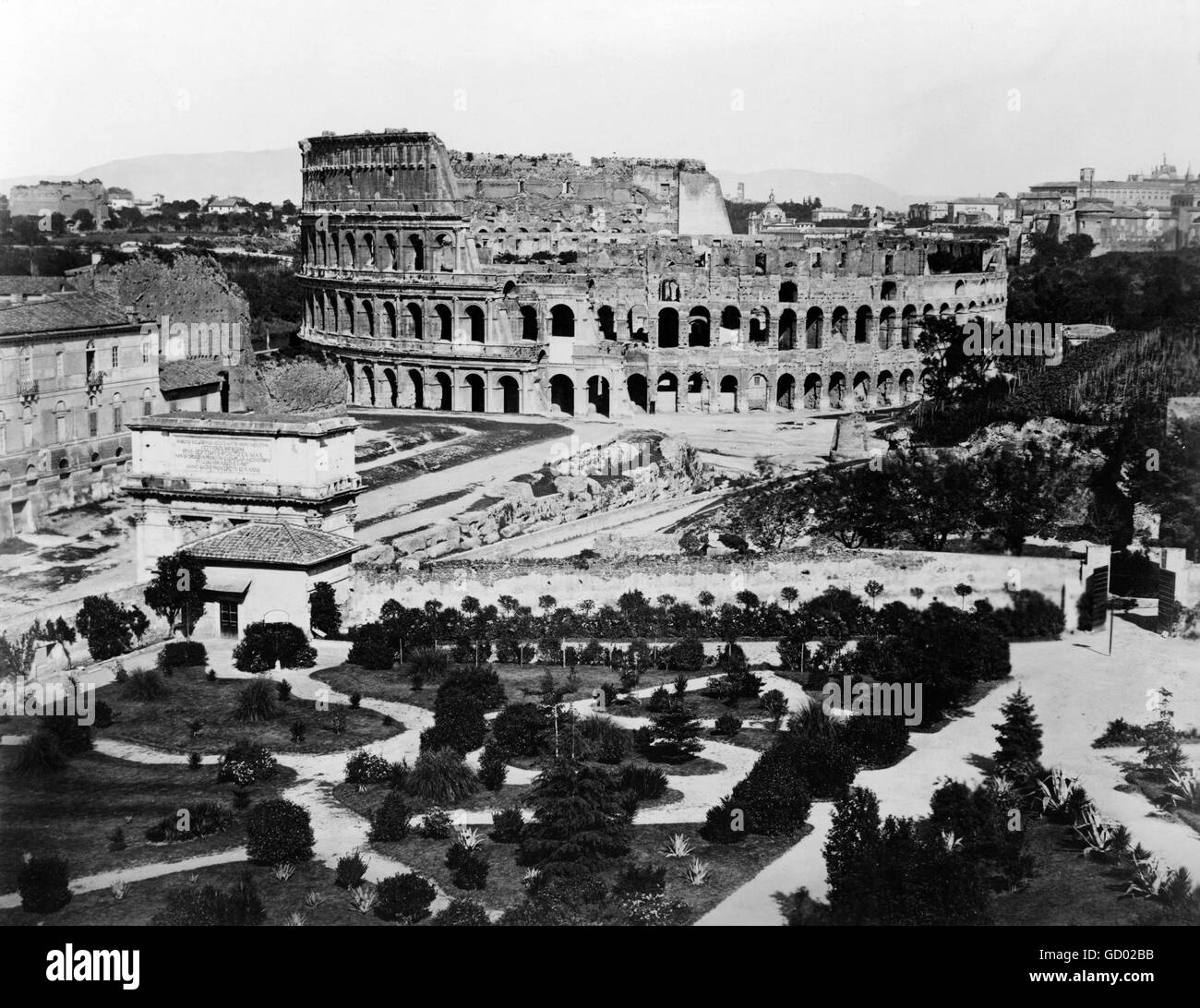
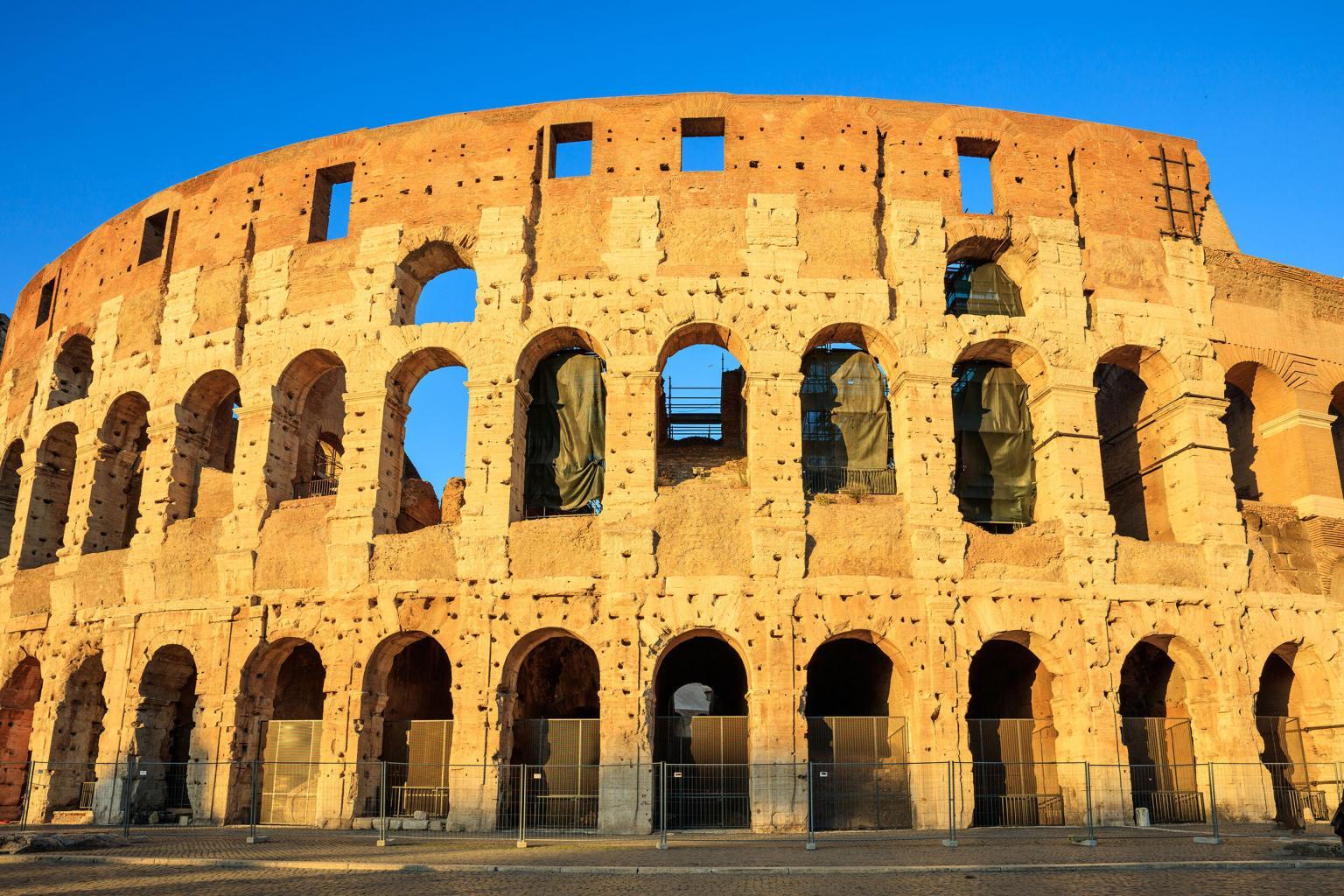
There are three reasons why the Colosseum is damaged. First, it was built very long ago under the leadership of the Flavians. It was started around 70-72 and was completed nearly 10 years later.
Colosseum, Rome, Italy Stock Photo Alamy
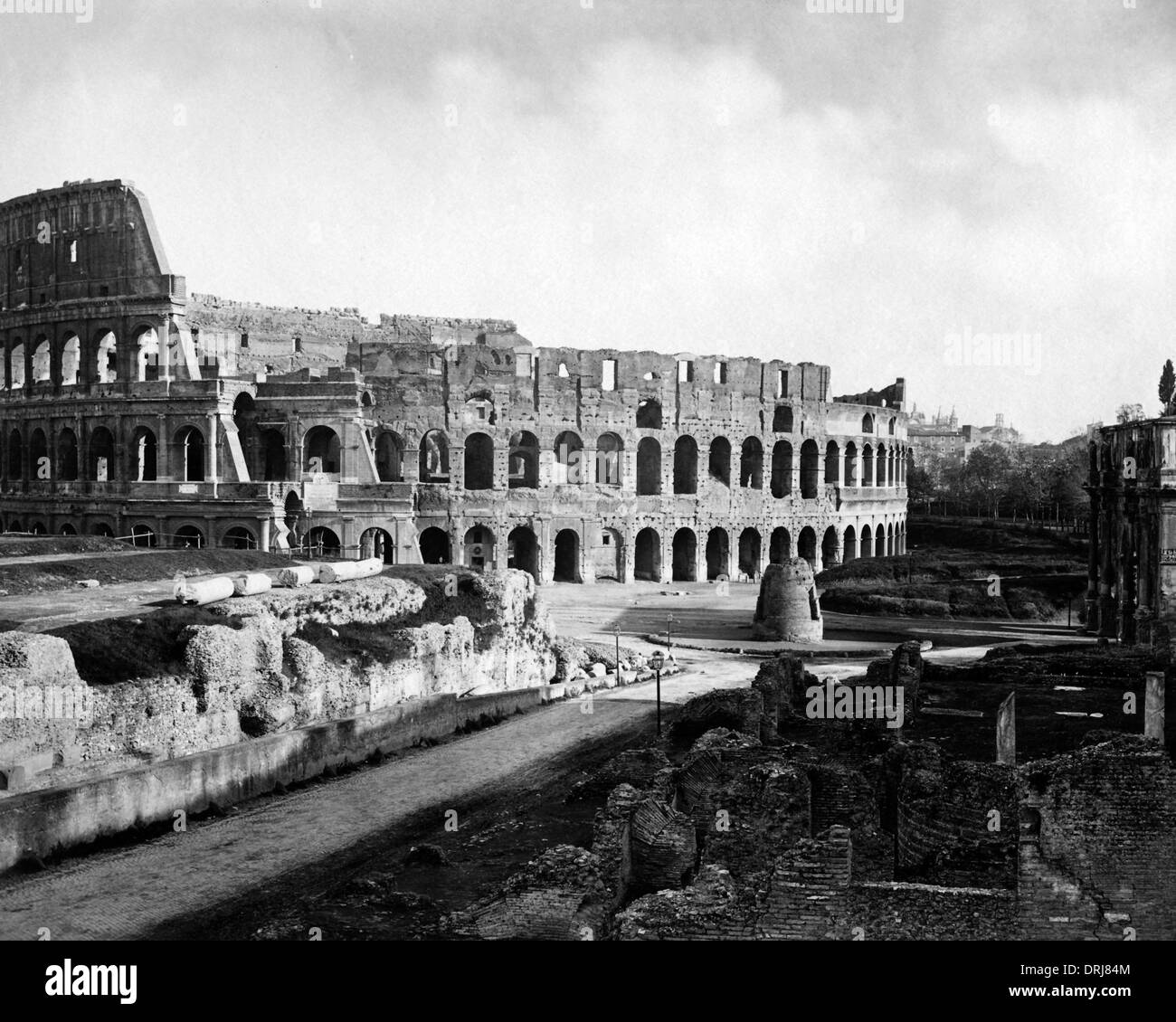
Natural disasters and human greed destroyed much of the Colosseum. Rome was replaced as the capital of the late-Western Roman Empire by Ravenna, though it later became relevant again as the residence of the pope and his government. The state of older buildings like the Colosseum did not reflect this, though, as multiple earthquakes, fires, and.
A New Floor for Rome’s Colosseum What You Need to Know Art & Object
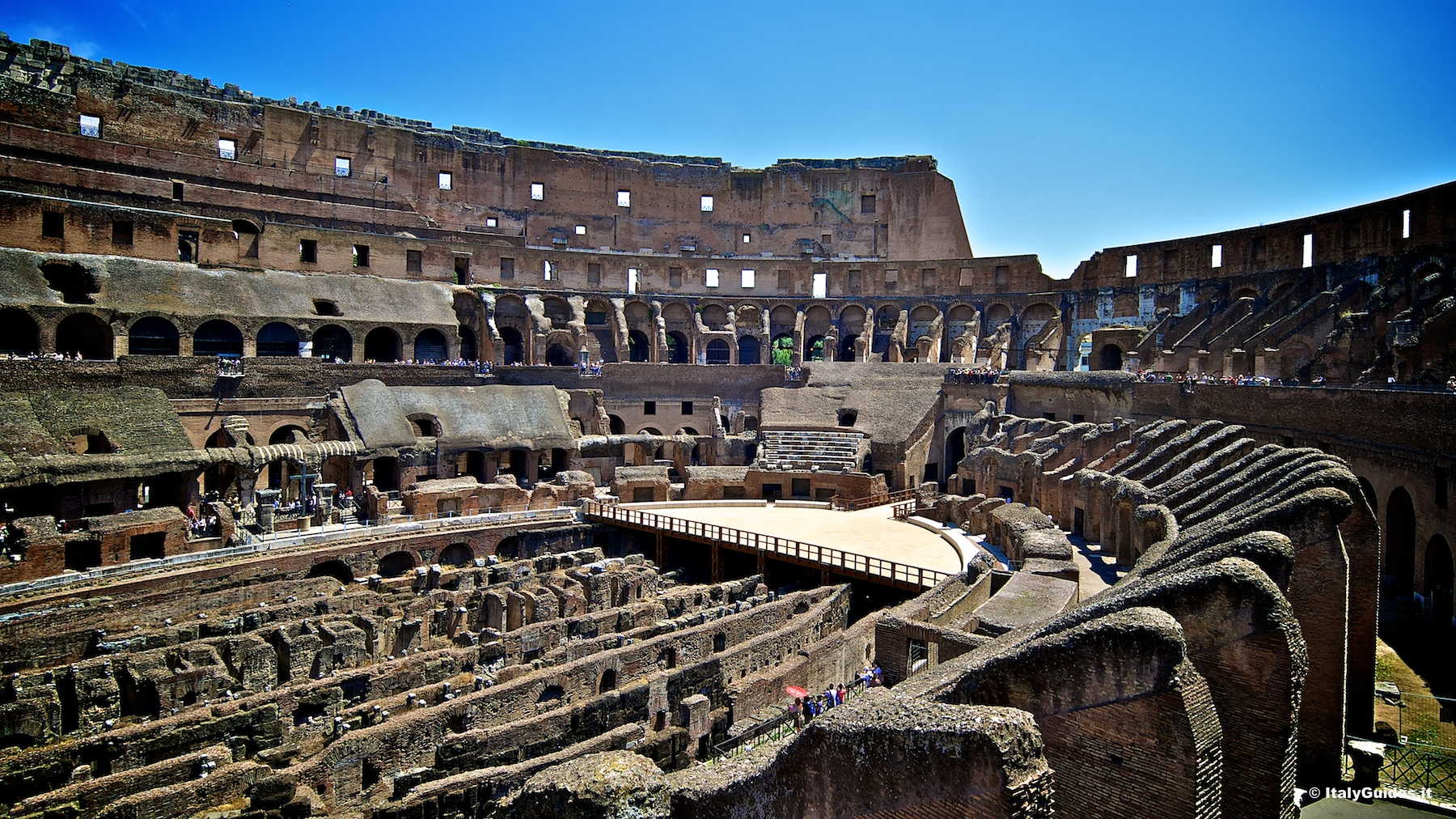
January 2011. During gladiatorial games in the arena, a vast network of man-powered machinery made animals and scenery appear from beneath a wooden floor as if by magic. Dave Yoder. The floor of.
Complete Guide To The Roman Colosseum CBS Chicago

The Colosseum fell into serious disrepair after the fall of the Western Roman Empire. During the 12th century, the Frangipane and Annibaldi families repurposed the arena to function as their fortress. In the late 15th century, Pope Alexander VI permitted the Colosseum to be used as a quarry. After over a thousand years of neglect, state-funded.
The Colosseum in Rome, Italy Stock Photo Alamy
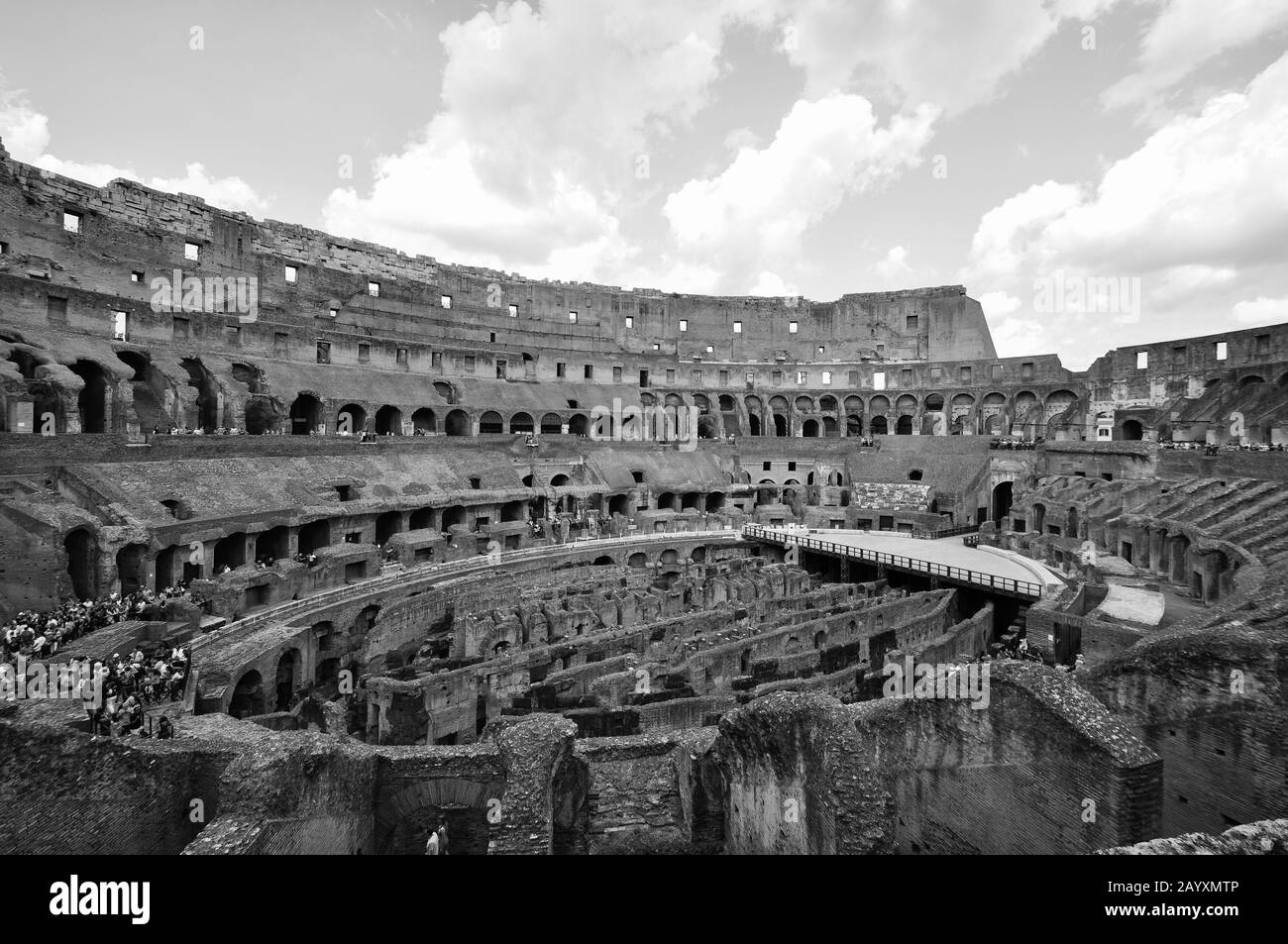
The Colosseum or Flavian Amphitheatre is a large ellipsoid arena built in the first century CE by the Flavian Roman emperors of Vespasian (69-79 CE), Titus (79-81 CE) and Domitian (81-96 CE). The massive arena held 50,000 spectators and hosted spectacular public entertainments such as gladiator fights, wild animal hunts, and public executions.
Colosseum Restoration Before And After
The Roman Colosseum, also called the Flavian Amphitheater, is an enormous stone structure built in A.D. 70.It was commissioned by the Flavian emperors for the Roman citizens, and it accommodated up to 50,000 people at a time. The opening of the amphitheater in A.D. 80 was celebrated with gladiatorial games that lasted for 100 days, according to National Geographic.
Episode 11 A Second Look at the Colosseum The Structure Itself GET READY FOR ROME!
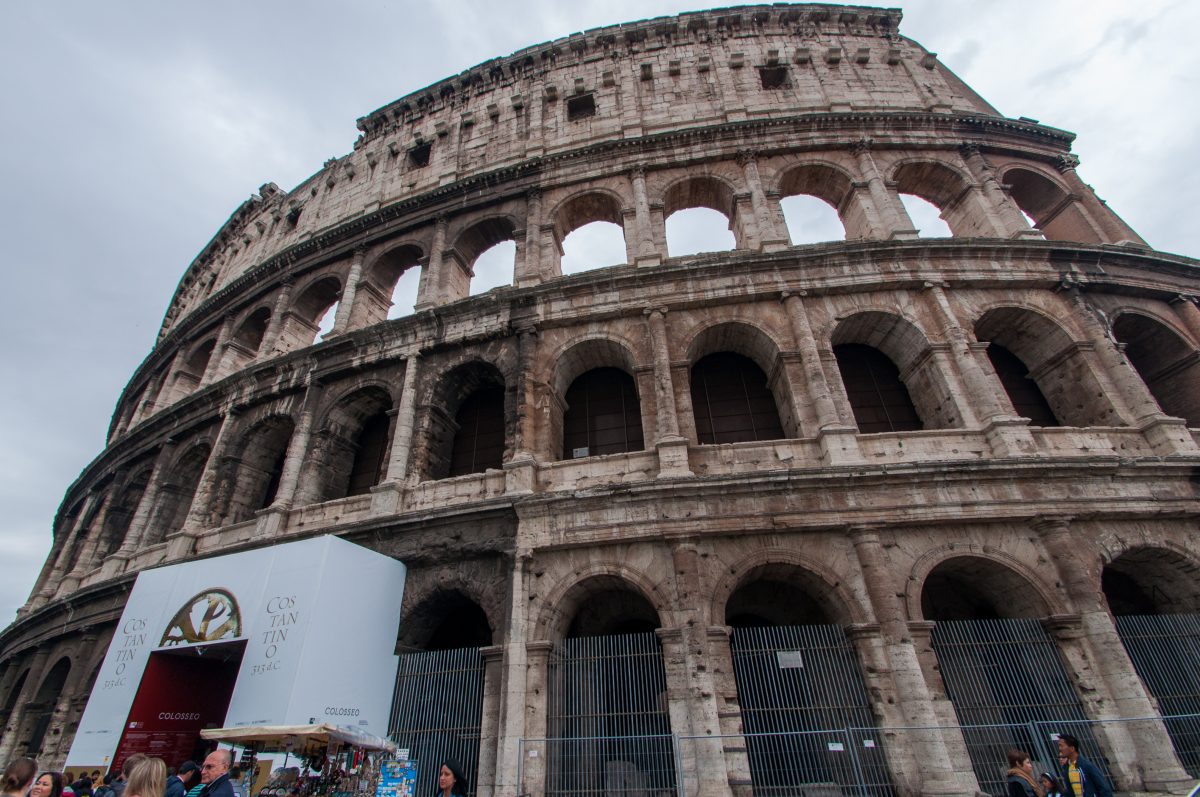
The Colosseum has witnessed the rise and fall of emperors, the shift of eras, and the transformation of Rome from the capital of an empire to a modern city.. Plant roots infiltrate the stone, causing it to crack and break apart, while the moisture retained by the vegetation further degrades the material. Resulting Structural Impairments.
The Roman Colosseum A History Of Destruction EcoTravellerGuide

This is when the real change occurred. Following the collapse of the Western Roman Empire the Colosseum fell into the hands of the church. Believing that the amphitheatre's arena was the spot where Christian martyrs had met their fate, they claimed the amphitheatre as their own. Anxious to use the once glistening stone for palaces and.
Colosseum Damaged By Roman Empire YouTube

Built in 70 A.D., Rome's Colosseum has been the site of celebrations, sporting events and bloodshed. Today, the amphitheater is a major tourist attraction, playing host to 3.9 million visitors.
.